Workshop photo gallery.
Twenty photographs from our Dongguan workshop show how we develop, make, inspect and prepare knitwear for shipment.
From development to dispatch.
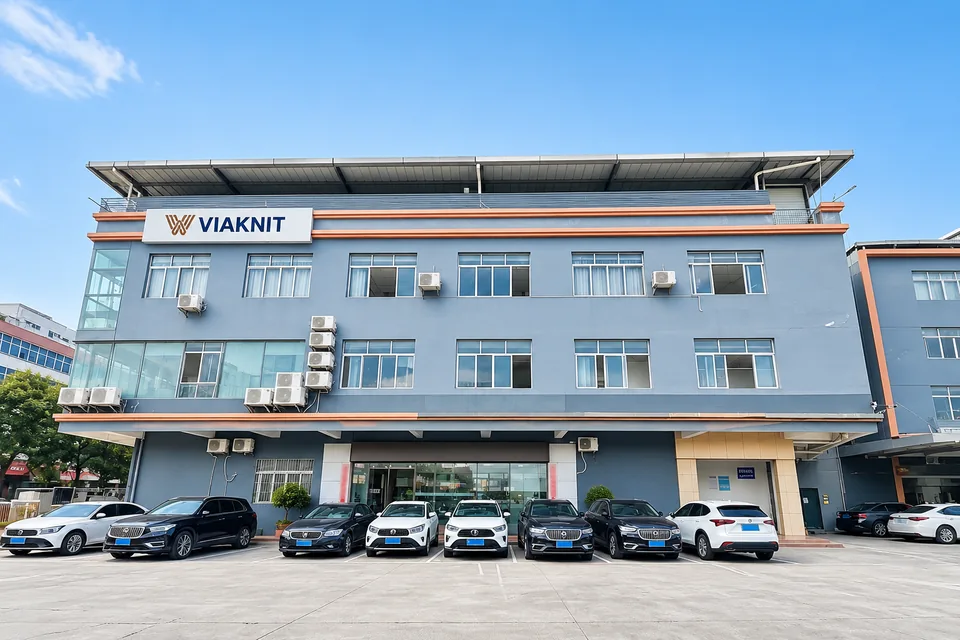
Factory Overview
Our Dongguan facility brings knitwear development, sampling and garment production together. Technical development, knitting, assembly and quality control each have a defined role in taking a design through to production.
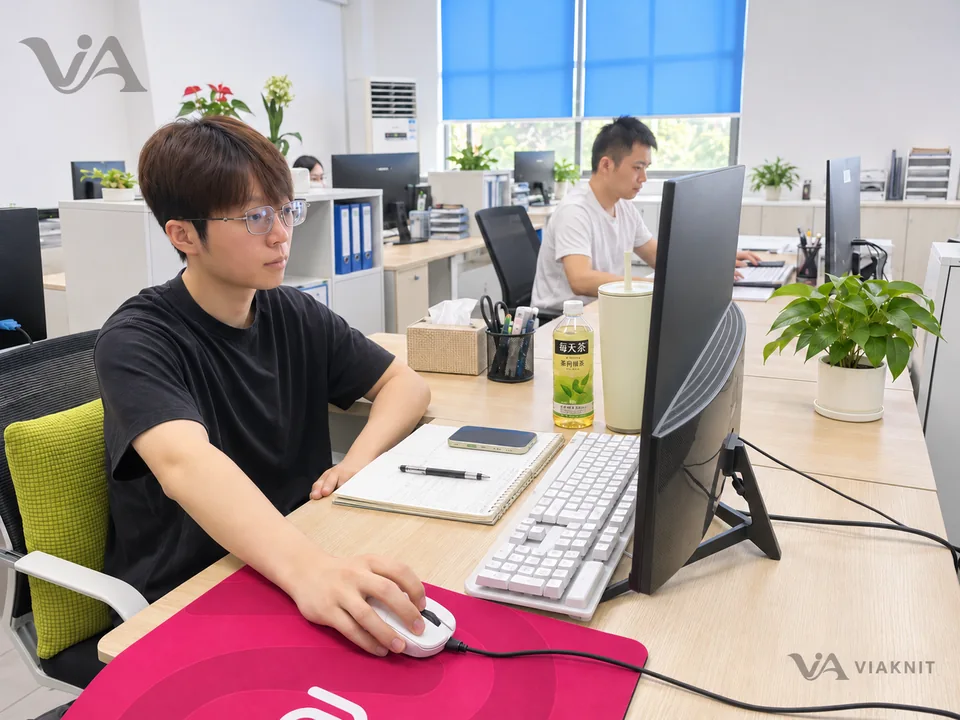
International Sales & Customer Project Team
The international team coordinates design reviews, sampling arrangements and technical questions with the development and production teams. Projects are assessed against the actual yarn, gauge and construction requirements.
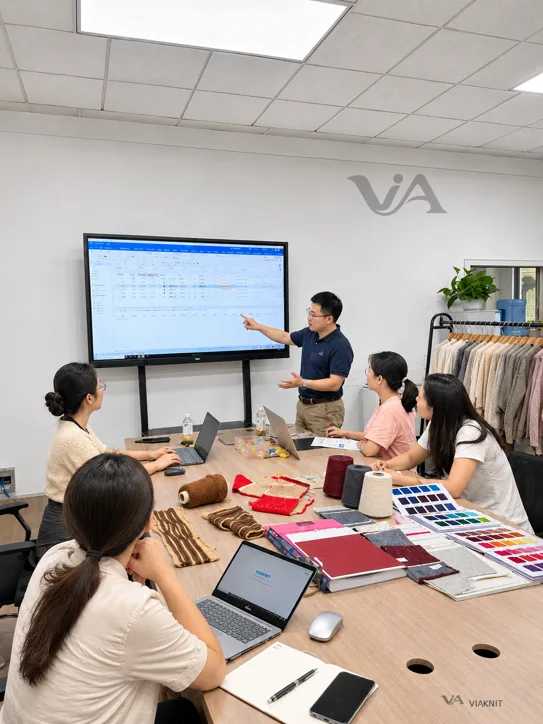
Production Review Meeting
Progress meetings cover order status, schedules, workflow and potential quality or delivery issues. The teams agree on follow-up when a technical issue or delay affects later operations.
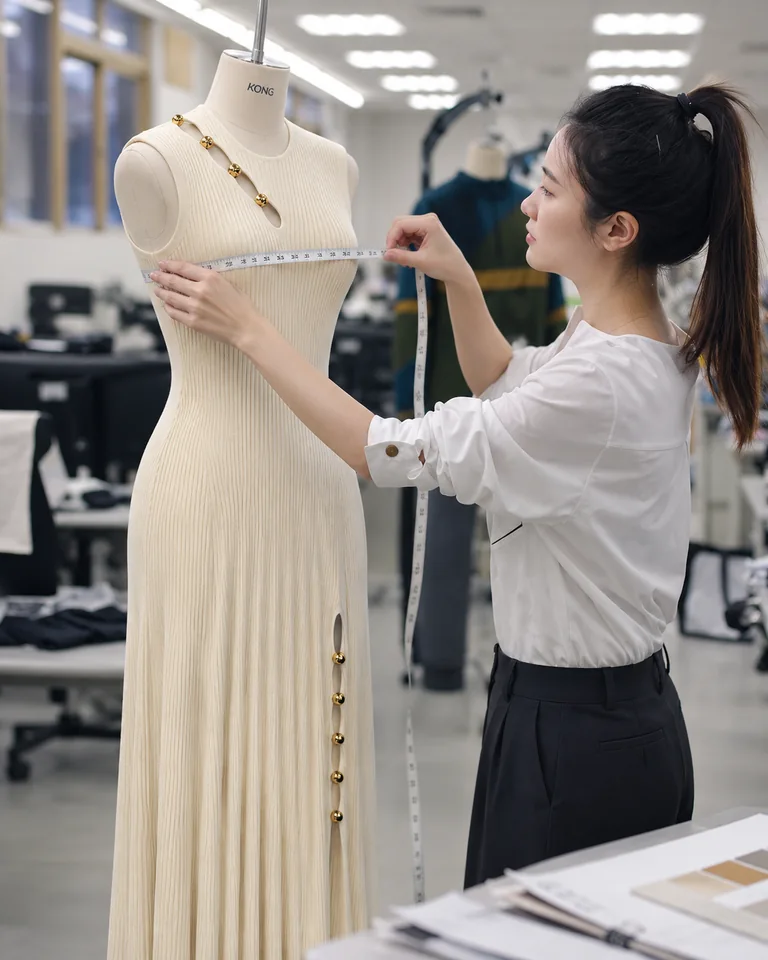
Technical Development Team
The technical team translates sketches and references into yarn, gauge and construction choices. Swatches and physical samples help the team assess appearance, hand feel, stretch and garment dimensions.
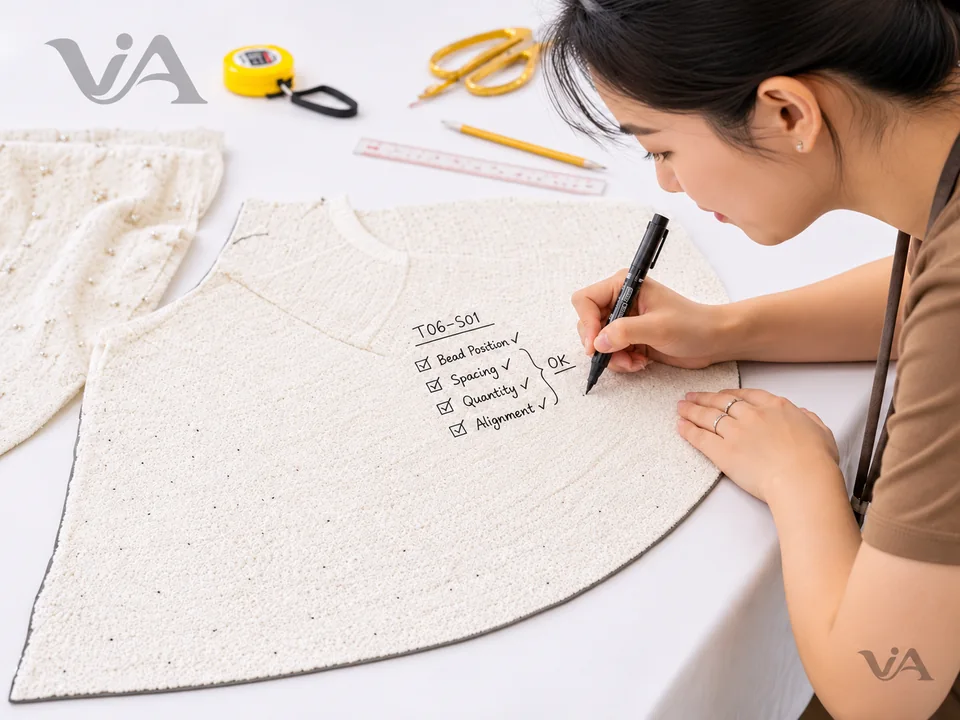
Production Follow-Up
The follow-up team tracks approved measurements, colours, structures, trims and finishing instructions. Sample revisions and order-specific requirements are communicated to the departments carrying out the work.
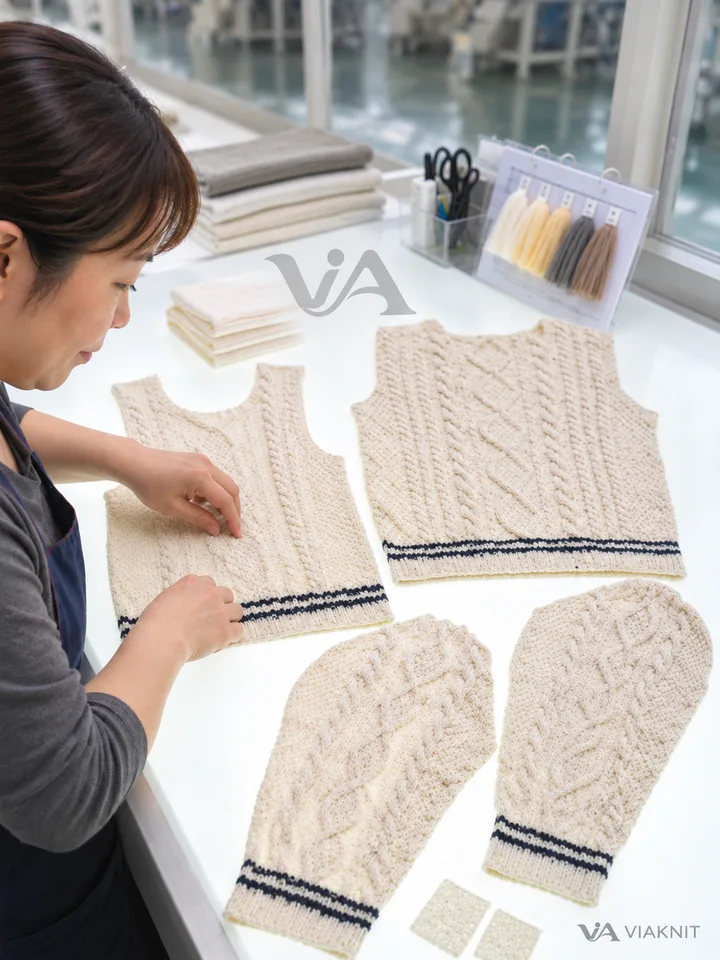
Knitted Panel Inspection
Every knitted panel is checked before linking. The inspection covers stitch consistency, panel shape, edges and visible issues such as dropped stitches or yarn irregularities.
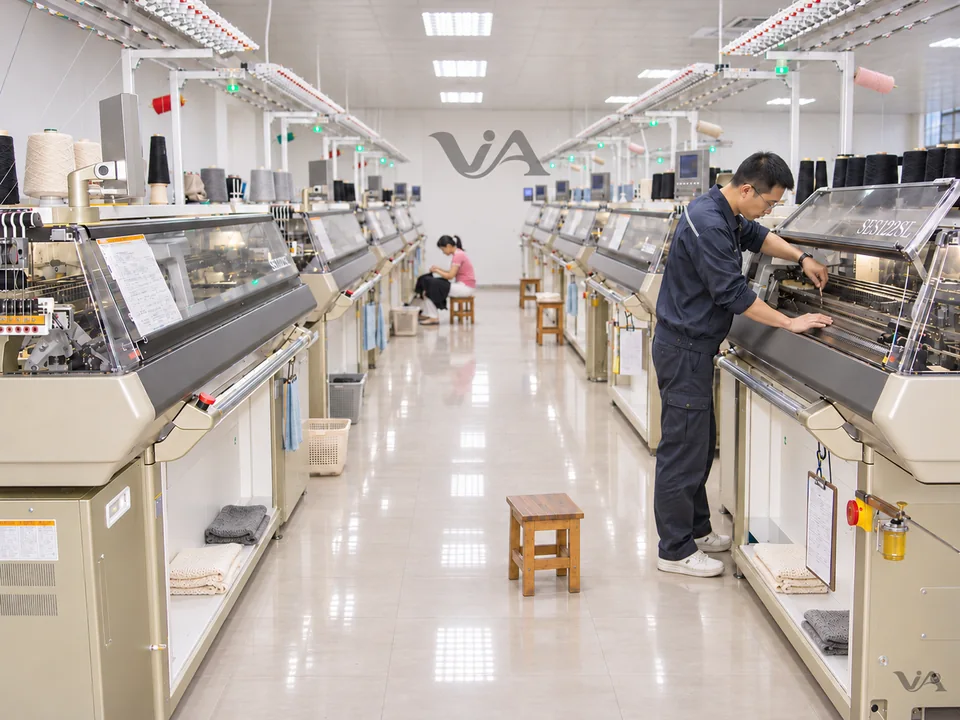
Computerized Flat Knitting Workshop
Computerized flat knitting brings together machine gauge, yarn specification, stitch length and fabric density. Fine-gauge constructions such as 14GG, 16GG and 18GG need particular attention to yarn selection and dimensional stability.
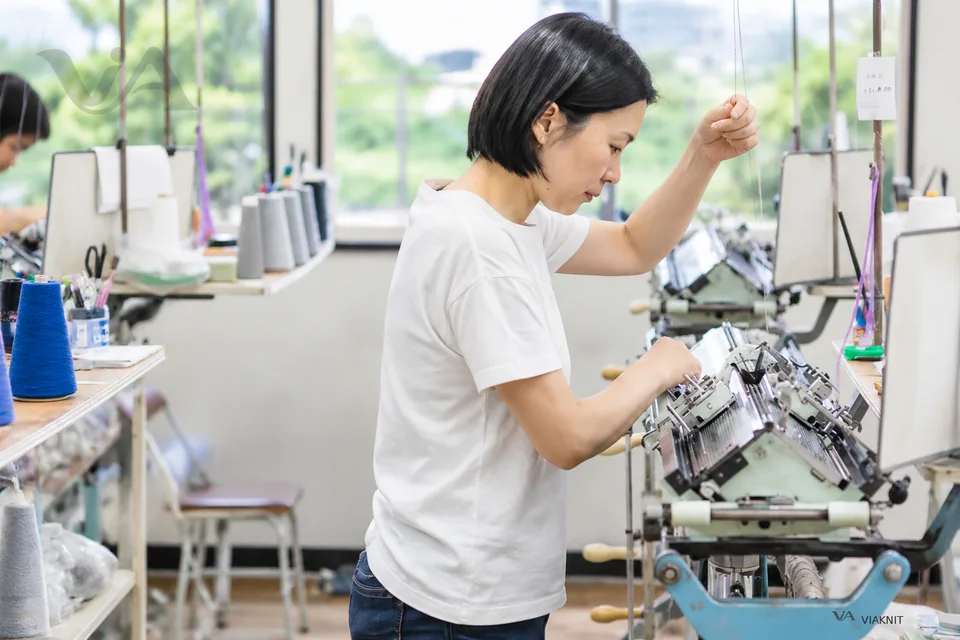
Hand-Operated Knitting & Skilled Operators
Hand-operated knitting supports selected sample work and construction trials. The team uses it to assess yarn behaviour, stitch appearance and special details during development.
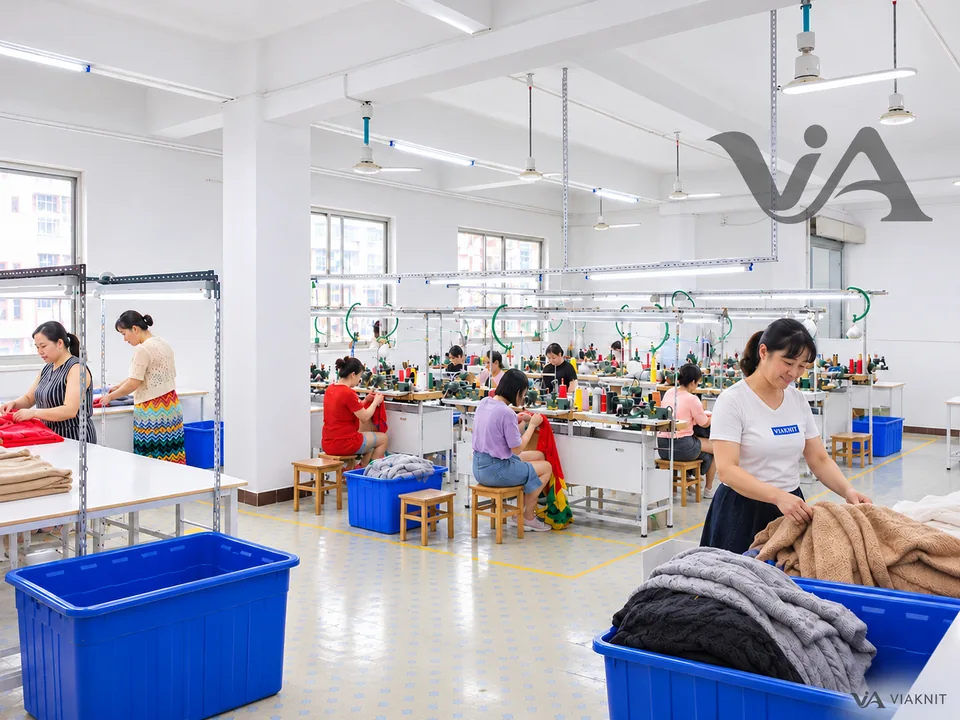
Garment Linking Workshop
The linking team joins panels, sleeves and collars according to the garment construction. Seam alignment, stitch continuity and linking tension are especially important when assembling fine-gauge panels.
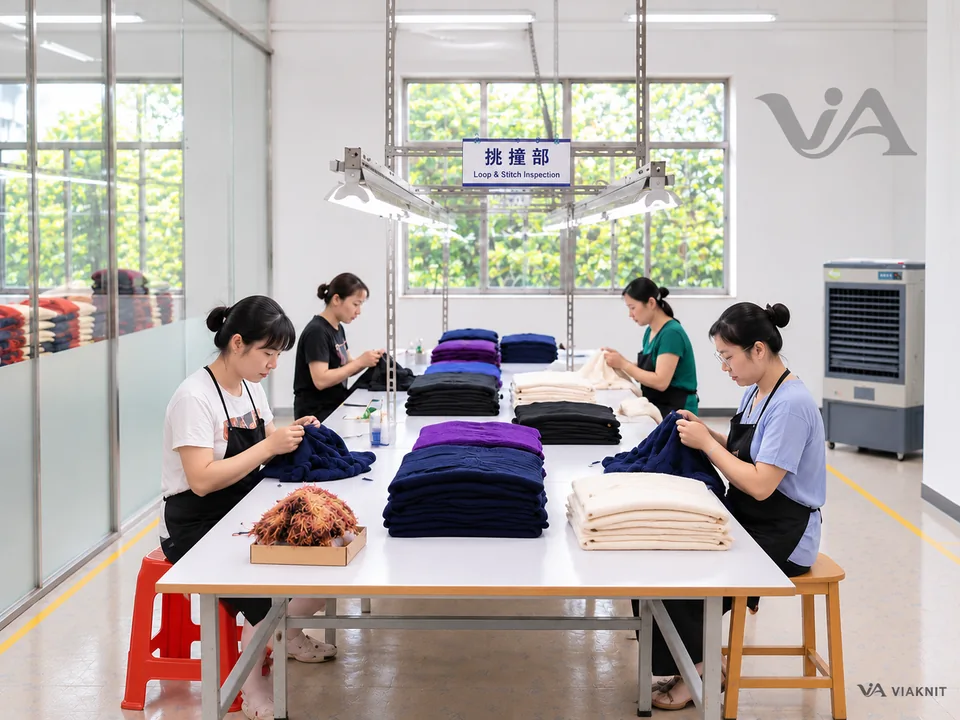
Loop & Stitch Repair
The team checks for loose loops, yarn ends and local stitch defects after linking. Repair work often focuses on collars, cuffs, hems, underarms and other joining points.
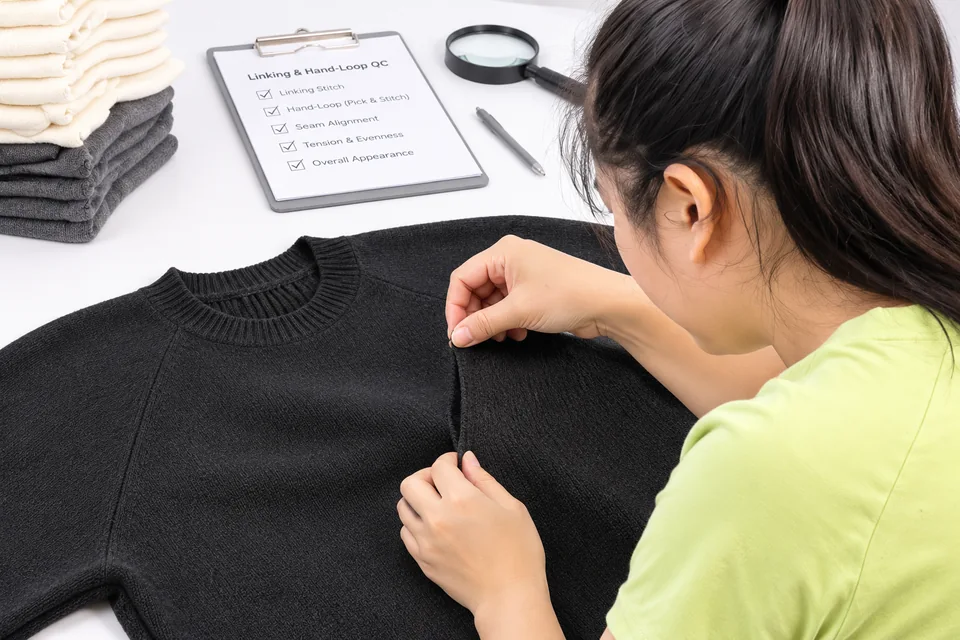
Linking & Stitch Quality Control
After linking and stitch repair, inspectors check seam consistency, elasticity, edge alignment and joins around the neckline, cuffs, hems and underarms. Issues are referred for correction or further assessment.
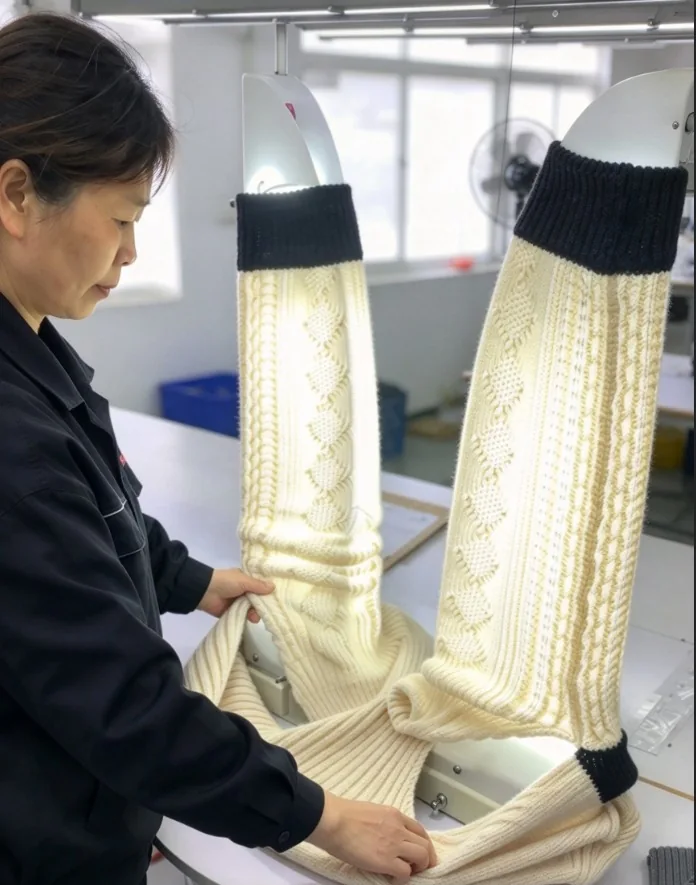
Light Inspection
An initial light inspection takes place before washing. The lighting helps the team spot loose fibres, yarn irregularities and other surface imperfections before further finishing.
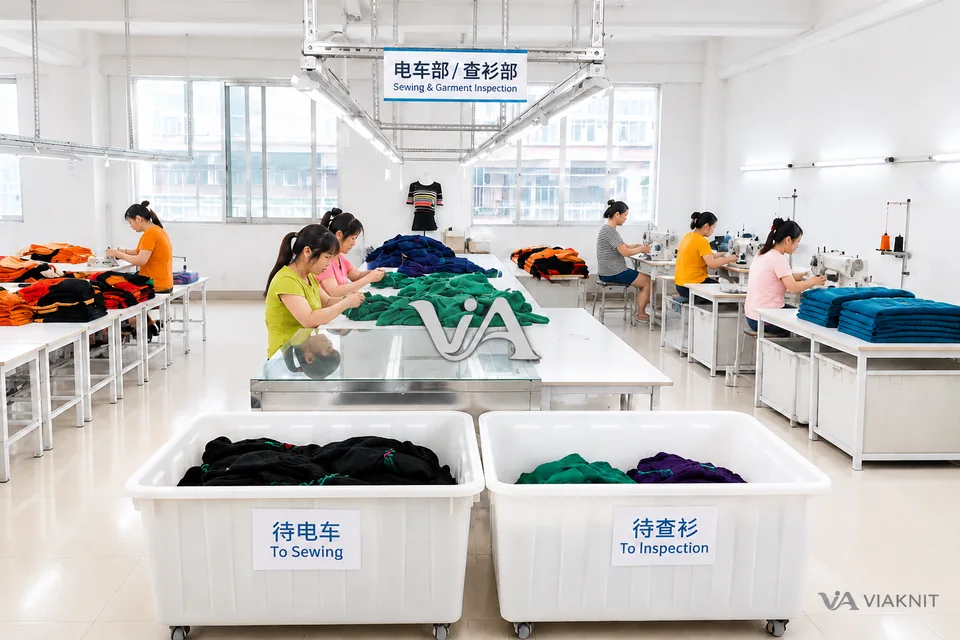
Sewing & Initial Garment Inspection
The sewing team attaches labels, trims and components to the approved specifications. Initial inspection checks placement, stitching and component alignment against the approved sample and customer requirements.
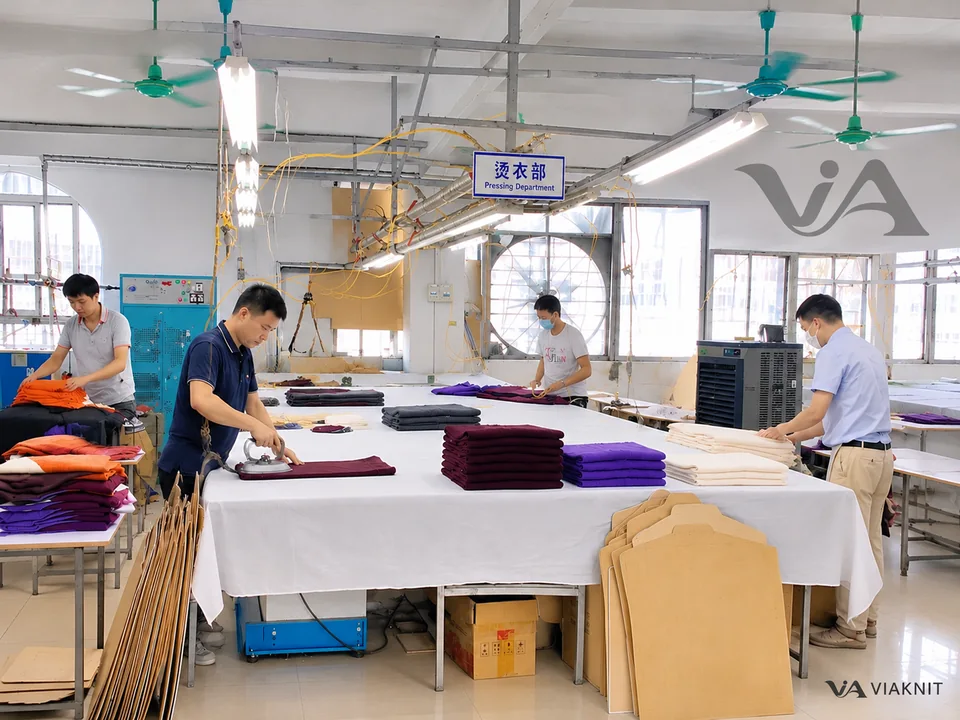
Garment Pressing & Shaping
Pressing and shaping are adapted to the yarn and stitch structure. The team controls heat, pressure, steam and timing to achieve the intended dimensions while preserving the fabric surface.
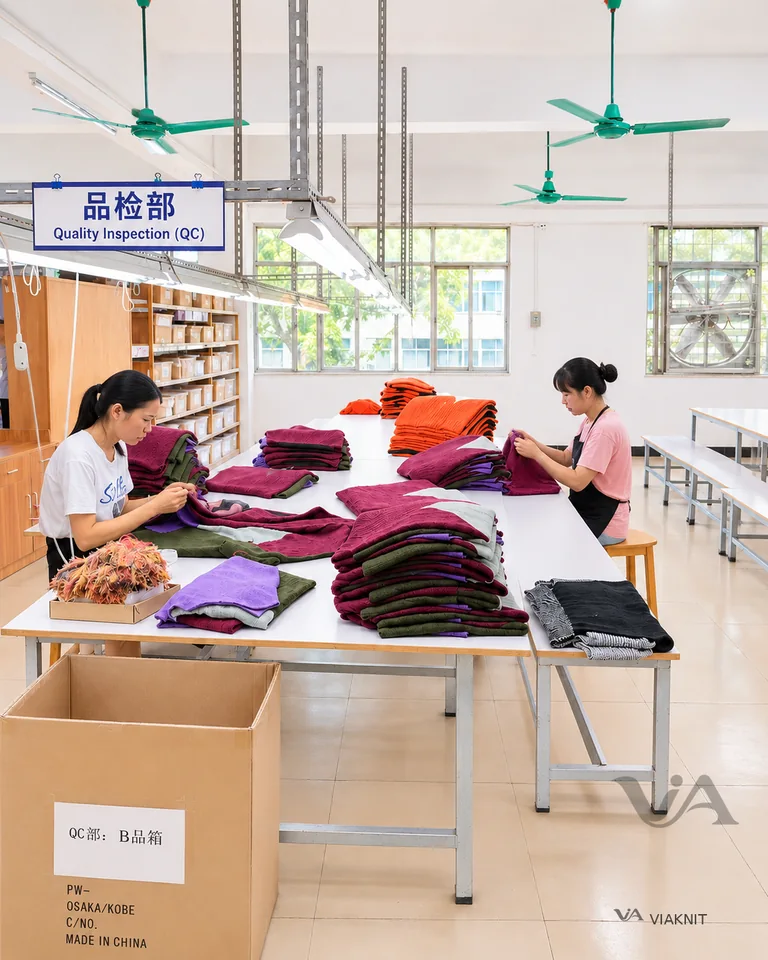
Final 100% Garment Inspection
Every finished garment is inspected before packing. The team checks dimensions, symmetry, stitch structure, seams, labels, trims and pressing against the approved requirements.
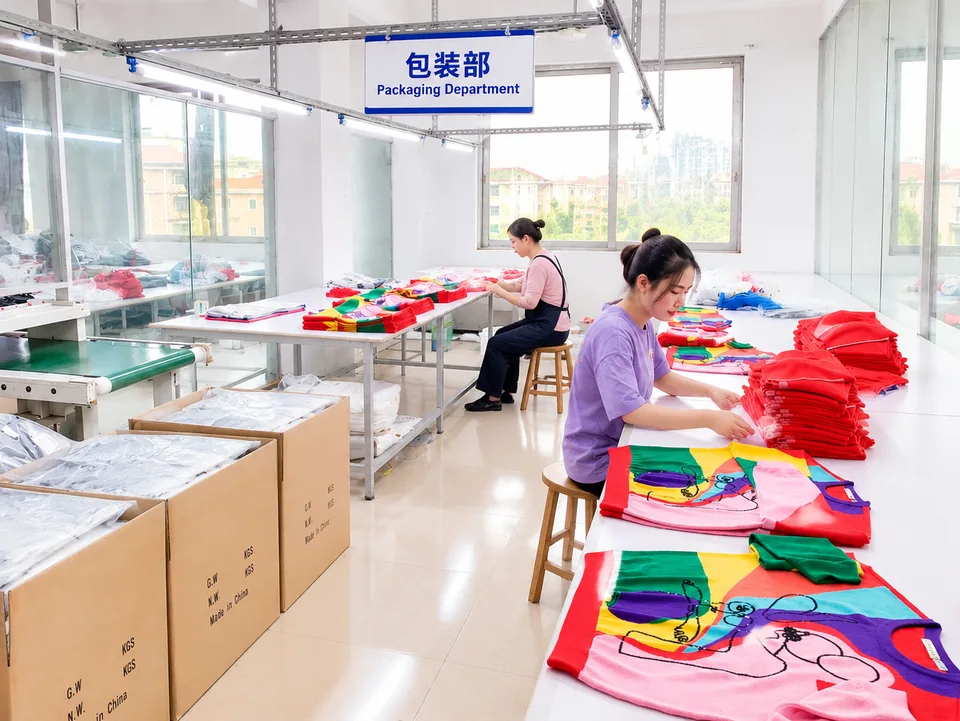
Garment Packing
The packing team follows the customer’s instructions for folding, sorting, bagging and labelling. Style numbers, colours, sizes and quantities are checked during order preparation.
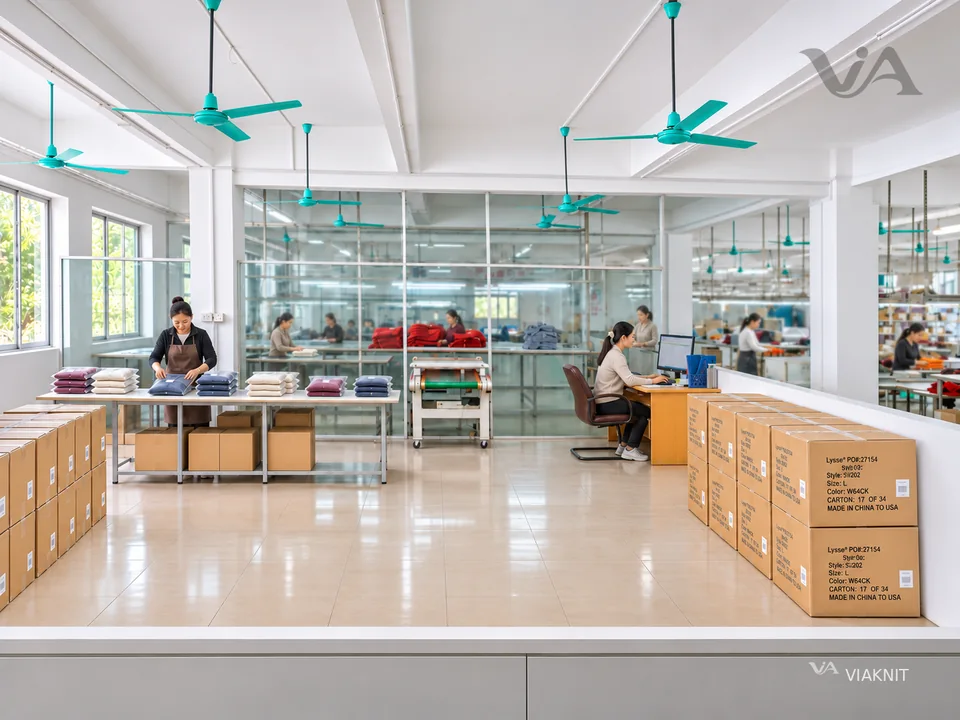
Metal Detection & Carton Packing
Where the order requires metal detection, the check takes place before final carton packing. The team verifies carton quantities, markings and shipment details before dispatch.
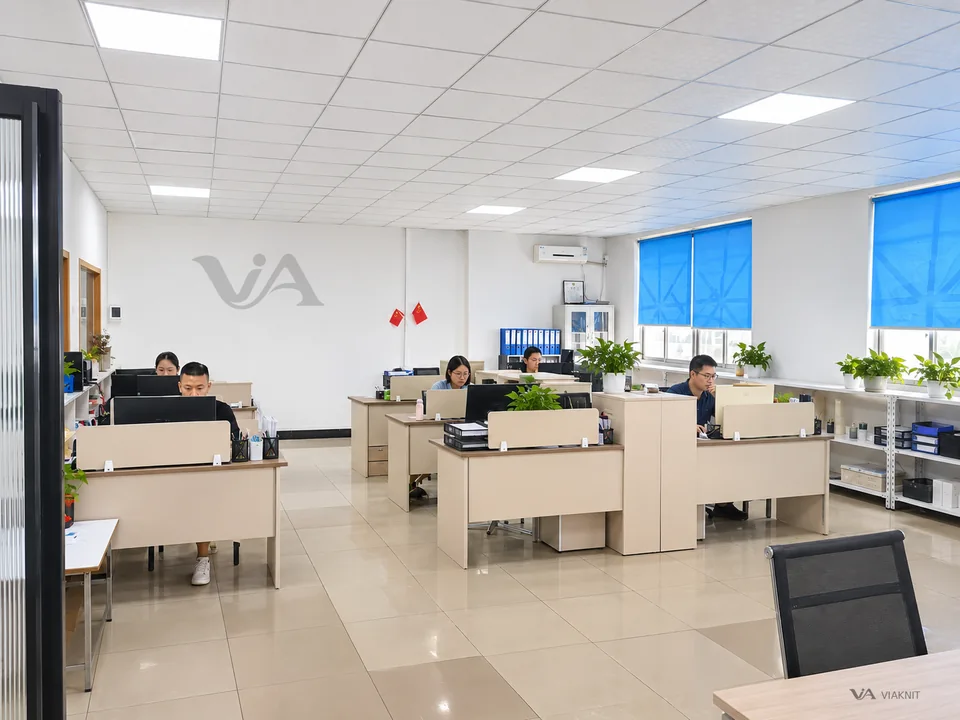
Production Management Office
The production management office coordinates schedules and communication across departments. The team monitors order progress and works with development, follow-up and quality control to resolve production issues.
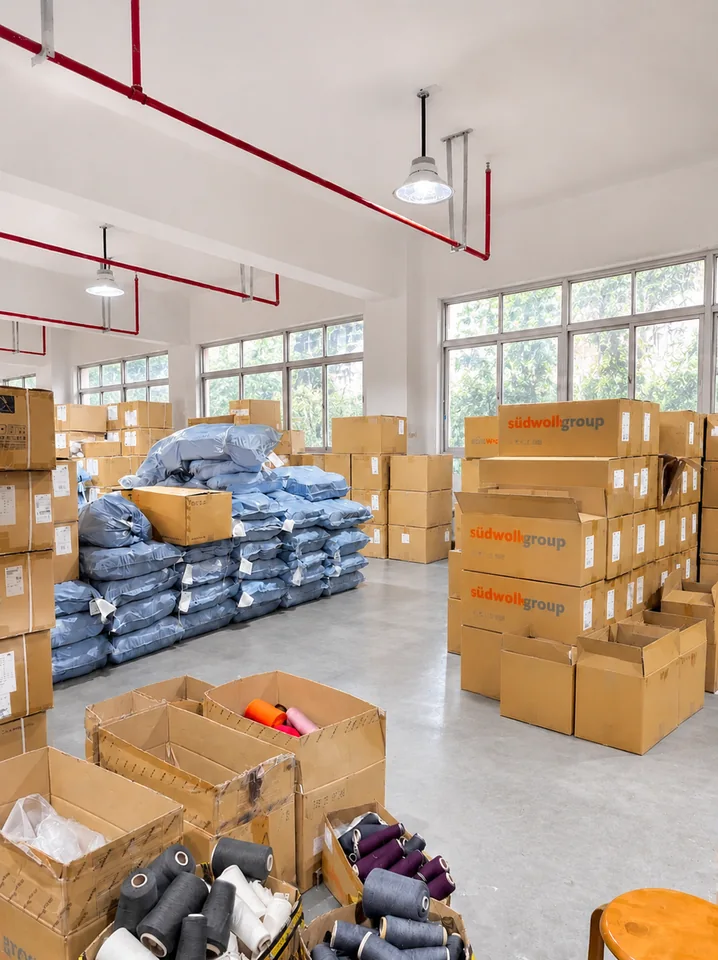
Yarn Warehouse & Material Management
The team considers fibre composition, yarn count, twist and construction alongside machine gauge and stitch structure. Stock colours and custom dyeing options are assessed according to yarn availability and project needs.
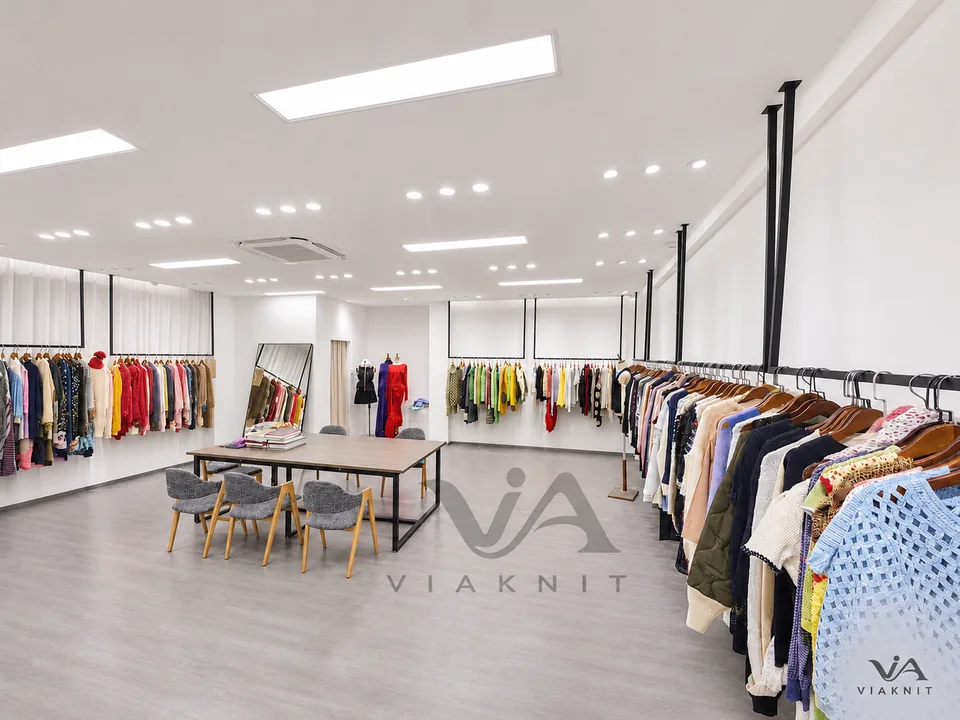
Knitwear Sample Showroom
Designers can compare garment samples, stitch structures and yarn combinations in person. Handling the samples makes differences in texture, thickness, drape and stretch easier to assess.