Capabilities / Mixed Materials
Embroidered Cutwork and Mesh Integration
These samples show two constructions for openwork detail on knitwear, using cutwork on a knitted base and embroidery on a separate mesh panel.
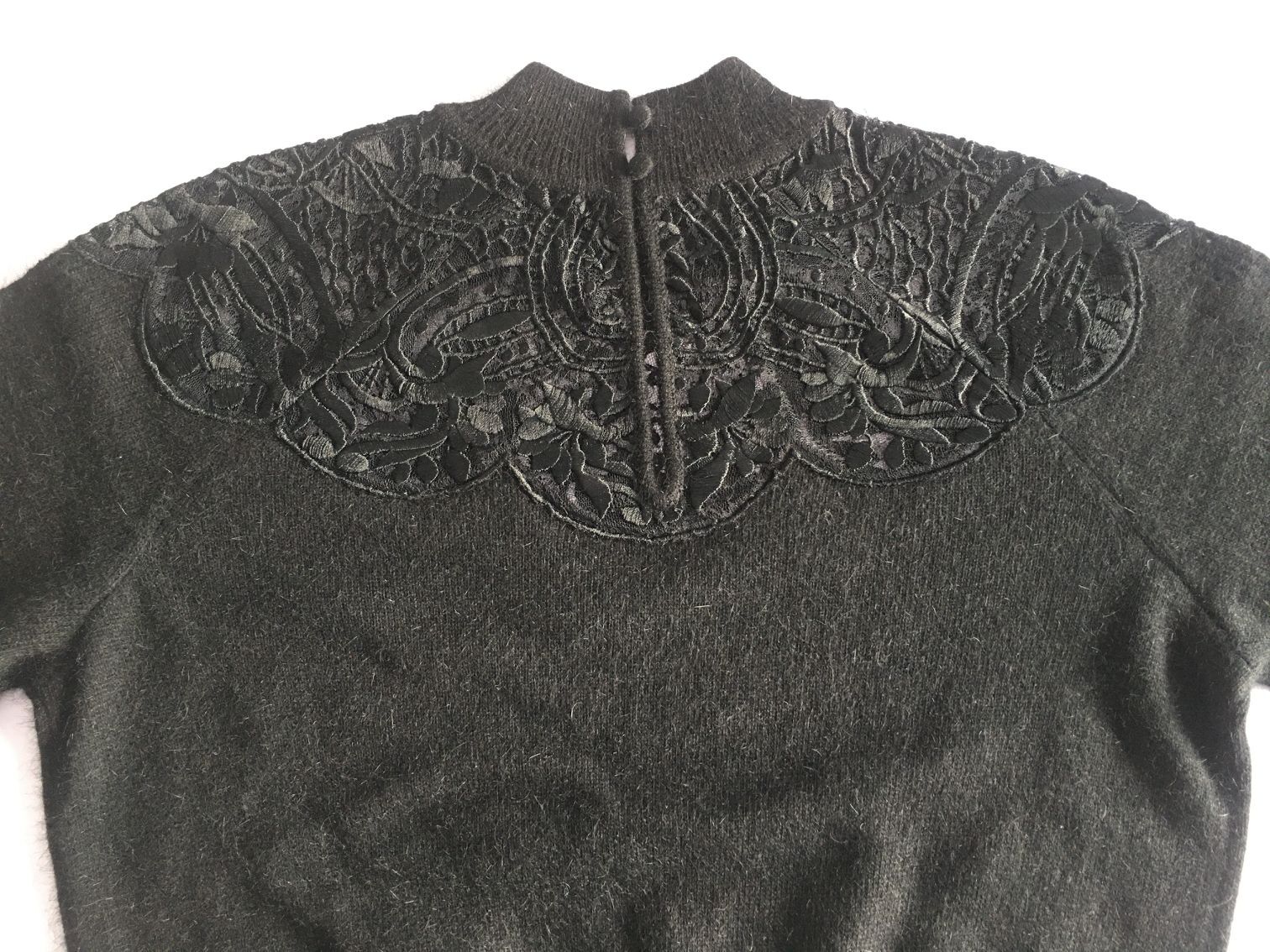
S01
Embroidered Cutwork Lace on Fine-Gauge Knitwear
Black-on-black botanical embroidery spans the upper chest, shoulders and neckline of a 12GG base knitted in 2/24 yarn with 50% yak and 50% wool.
Selected areas of the embroidered design are opened through cutwork. Stitch tension and the movement of the knit matter where the embroidery borders each opening.
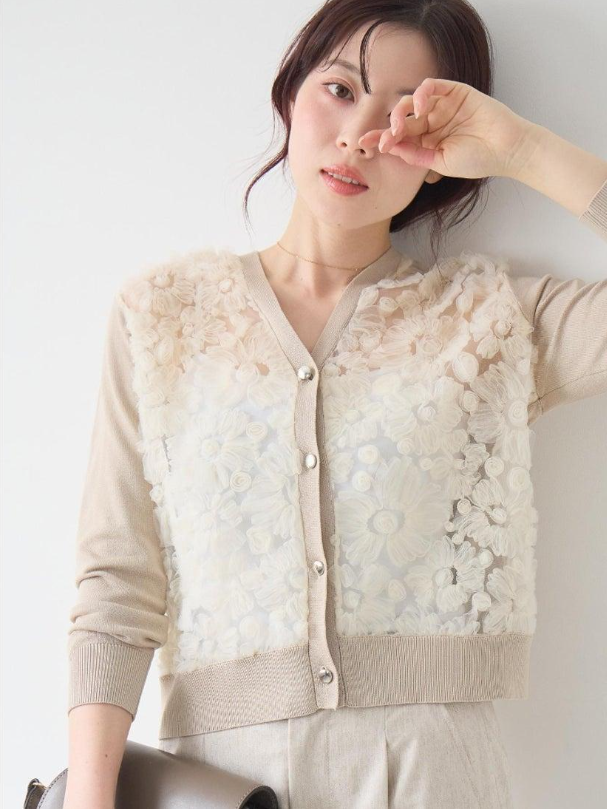
S02
Embroidered Mesh Panel Integration
Floral borders and horizontal trims are embroidered on dusty mauve sheer mesh before the panel is integrated into the knitted front.
The mesh and knit need to work together at the join, where differences in stretch, weight and dimensional stability affect how the panel hangs.
Technical Development Considerations
For the 12GG yak–wool sample, evaluate stitch density, temporary stabilisation and reinforcement around each open edge. Review local distortion, dimensional change and backing comfort before approving a construction.
For the separately embroidered mesh, test thread tension, trim attachment, pattern alignment and panel dimensions before joining it to the knit. Trial the seam with the actual embroidered mesh and knit base, then inspect seam flatness, panel drape and dimensional change.
Selected FAQs
What is the difference between cutwork embroidery and lace appliqué?
Cutwork embroidery creates open areas by removing selected sections of the base fabric and reinforcing the remaining edges. Lace appliqué generally involves attaching a separate lace component to the garment. The two methods can also be combined. Before sampling, designers and manufacturers should confirm whether the intended design requires direct cutwork, a separate lace panel or an integrated construction.
How can manufacturers prevent puckering when joining mesh and knitwear?
The development process should evaluate the stretch and dimensional behaviour of both materials. Appropriate seam construction, panel positioning and controlled sewing tension can help reduce puckering. A joining trial using the actual knitted base and embroidered mesh panel is recommended before prototype approval.
Develop with us
Have a detail
in mind?
Share a reference, a material or an effect you would like to explore. We can help develop a direction for your knitwear.
Discuss Your ProjectExplore our development process ↗